Monday, August 23, 2010

Ginger´s Paradise


I just spent the last 6 days at Ginger´s Paradise, a farm near Samaipata, Bolivia. Gingers is run by an American ex-pat, Chris, and his Bolivian wife Sol. At the farm you pay to stay and can help out doing a number of tasks to reduce your cost of staying. At Gingers I made pineapple and apple marmelades, worked construction, harvested and husked lentils, made tofu, and ate some amazing food.

The wood fire oven with fresh baked bread, soup, and marmelades cooking.


Breakfast. Homemade pesto on homemade bread. Plus the jams we made.


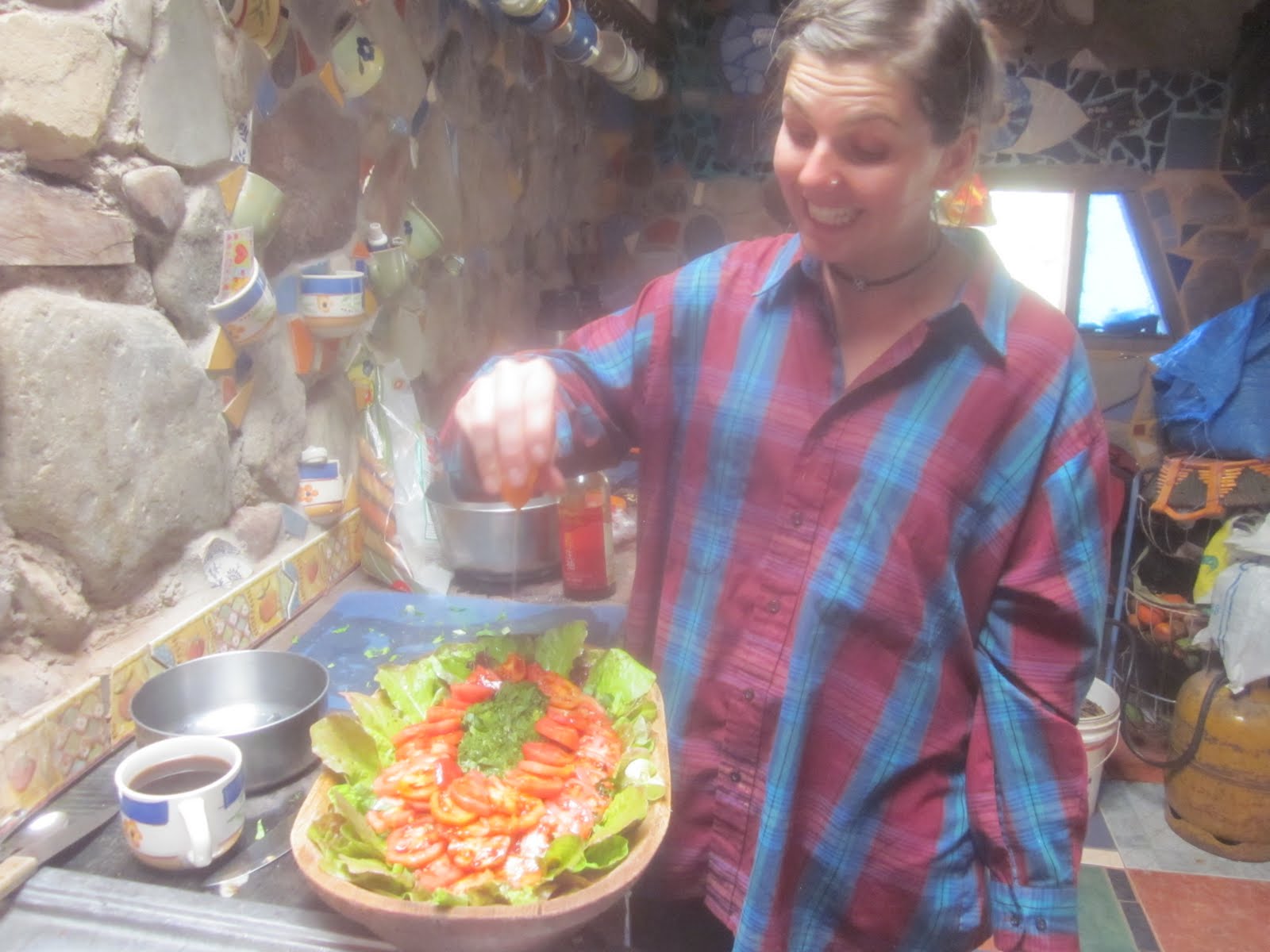
Sarah and her fresh picked salad.


Ginger working on peeling an apple to make jam.


At Ginger´s they use only renewable energy. Most of the electricty comes from solar or hydro power, but when the blender needs to work to make pesto, this exercise bike provides all the power needed.

Tuesday, August 17, 2010

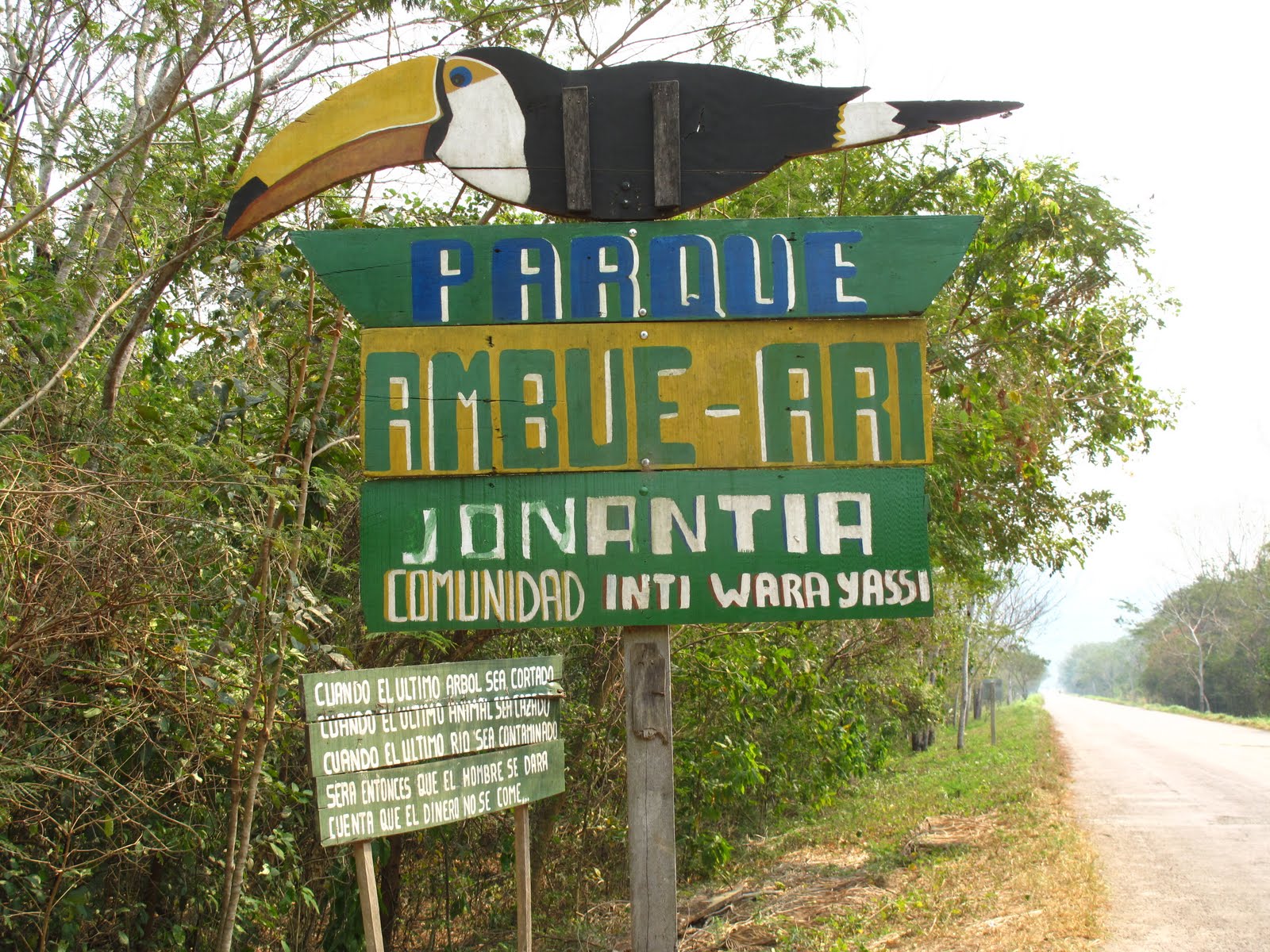
Parque Ambue Ari


I´ve spent the last 2 months volunteering at an animal refuge in Bolivia called Ambue Ari. Ambue Ari is one of three parks in Bolivia run by the non-profit Inti Wara Yassi. At the park dozens of hard working volunteers work with Jaguars, Pumas, Ocelots, Monkeys, and other animals native to Bolivia in an effort to rehabilitate or recreate as natural a life is as possible for the animals. The animals come to the park for a number of reasons, some are orphaned, some were house pets, and others were injured and now rely veterinary care.

I worked with an amazing Jaguar named Katie. Not much is know about Katies past, but she was donated to the park and likely lived as the house pet of a Bolivian family until she grew too big. I would spend my days taking Katie on walks, feeding, and playing with her. Walking Katie was somewhat similar to walking a dog, she was attached by her collar to lead which wrapped around my waist. Katie was amazingly well behaved and affectionate. She was extremely calm and spent her hours walking through the jungle or sleeping in a patch of grass.

During my time at the park Katie went on heat and a wild jaguar came to visit her on a regular basis. We could tell that he would sleep next to her cage because he made a bed directly opposite hers. I was really lucky one day and after Katie began stalking, we ran into the jaguar and were about 5 or 6 meters away from him. After a brief standoff he ran away into the jungle. It was an memorable and rare encounter with a wild jaguar.

The wild jaguar spotted on Katies trail.


Katie.


The routine at Ambue Ari meant waking up a 6:30am every morning to begin tasks, eating breakfast at 8am, and spending the rest of the day with your animals until returning to camp at 4pm for lunch. The park has no electricity and uses a generator to pump water from a well. The park relies on volunteers for both labor and financial survival. When I was there the number of volunteers flucuated greatly but for the most part we around 50 or so people. During the wet season numbers are dwindle to as low as 10. The animals are amazing but the people really made the experience special. The park is full of hard working eccentrics and interesting characters that I will not soon forget.

This is Leo, a Puma that I worked with for a week.


The park has an aviary with macaws, toucans, and parrots.


This is Herbie, a loveable and gentle Tapir.


My time at Ambue Ari was fantastic and I´d recommend it to anyone who loves animals and is willing to spend a month or two working in the jungle.

Here is the website of the organization I volunteered with check out: http://www.intiwarayassi.org/articles/volunteer_animal_refuge/home.html

Saturday, June 19, 2010

Rurrenabaque & The Amazon

In 1997 Bolivia created Madidi National Park. 10% of the known species of bird on Earth live within the Park.

We did a 3 day jungle tour with our guide, Ismail, who lived in Madidi for the past 13 years. His oldest sister was eaten by an Anaconda when she was 12. His brother shot and killed a Jaguar in their house when it came into the kitchen. Ismail knew his stuff. We learned a lot about the medicinal properties of some of the native plants. But spotting wildlife in the jungle was difficult because the forest is so dense and the animals are sensitive to noise and very skittish.

Leaf Cutter Ants hard at work.


Red and Green Macaws.


Building a Balsa wood raft.


Wednesday, June 9, 2010

River Boat & Porto Velho

The boat trip was memorable to say the least. This picture is of the top deck of the boat where we slept. If you can´t tell from the last post, the sleeping quarters got much more confined since we orginally hung up our hammocks on the day before departure. Sleeping in such tight quarters was a bit awkward because you bump into strangers all the time while sleeping.


When your sailing against the current, as we were, you get a better view of the river banks because they keep the boats close to shore to avoid the stronger currents in the middle of the river. Despite this, spotting wildlife besides birds and dolphins is pretty difficult.


Sunrise on the Amazon. Everyone on the boat is up by 5:30 or 6am because they begin serving breakfast from 6-7am and only serve for one hour, plus they often run out of food, so the earlier your up, the better chance you have at eating. In general our meals were actually really surprisingly good. In addition to the normal three meals, they had a few BBQ´s with steak or fish. Including one morning when they served steak at 8am with beers flowing freely.


Towards the end of day 4 there was a bunch of commotion on the boat. Someone spotted a deer trying to swim accross the river and everyone freaked out. A few of the crew ran to the small motor boat attached to our main boat and went off to get the deer. A minute later one of them had jumped into the river and wrestled the deer onto the boat and snapped its neck. They hog tied the deer and brought it into the kitchen.


Once we got to Porto Velho we met up with a med student from Couch Surfing who took us to this awesome Acai bar. This thing had guava, banana, apple, avocado, kiwi, strawberry, and some other cool amazon fruits, and of course acai.

Thursday, June 3, 2010

Manaus & The Amazon

We finally made it to the Amazon. Manaus is a major shipping port 1500km inland from the Atlantic Ocean.

This is a picture at the meeting of the waters. Here the two main rivers that make the Amazon, the Rio Solimoes and the Rio Negro meet. The Rio Negros waters originate from Colombia, its dark coffee like waters are due to decaying vegetatian. The Rio Solimoes orginates in the Peruvian Andes and is cream colored due to the turbidity. The two rivers run side-by-side for over 15km because of the temperature and density differences, and once they finally do mix, it becomes the Amazon River.


The Manaus Opera House is this weird relic from the rubber boom. The building doesn´t really fit in with the rest of the Manaus. The Opera House took five years to complete and was finished in 1896. Everything besides the wood was imported from Europe by steam ship.


We got a chance to hang up our hammocks today and take a look at our boat to Porto Velho for the first time. The trip takes 4 days and costs 110 Reais (60usd) per person. While the boat isn´t cramped now, by the time we depart Manaus we should be stuffed in with hundreds of other passengers.


The night before departure we splurred on all you can eat Rodizio. That ended my month or so boycott of beef which started after Ihla Grande due to environmental concerns.


The Mercado at next to the docks in Manaus where you can see really interesting looking Amazonian fish being sold and butchered. They also have a fruit market with some cool jungle specialties.